A Curriculum Built Around How Children Actually Learn
At Beginnings Learning Center, we believe young children need opportunities to move, explore, ask questions, make choices, solve problems, build friendships, and try things for themselves.
That’s why our curriculum is designed in-house around the way young children learn best: through meaningful, hands-on experiences and plenty of time to play, discover, and follow their curiosity.
As children grow from toddlers to preschoolers to Pre-K, their learning develops with them. We introduce new challenges, build important skills, and gradually increase the structure and school-readiness activities they’ll need for kindergarten, without losing the play and discovery that make early childhood so valuable.
A Curriculum Built Around How Children Actually Learn
At Beginnings Learning Center, we believe young children need opportunities to move, explore, ask questions, make choices, solve problems, build friendships, and try things for themselves.
That’s why our curriculum is designed in-house around the way young children learn best: through meaningful, hands-on experiences and plenty of time to play, discover, and follow their curiosity.
As children grow from toddlers to preschoolers to Pre-K, their learning develops with them. We introduce new challenges, build important skills, and gradually increase the structure and school-readiness activities they’ll need for kindergarten, without losing the play and discovery that make early childhood so valuable.
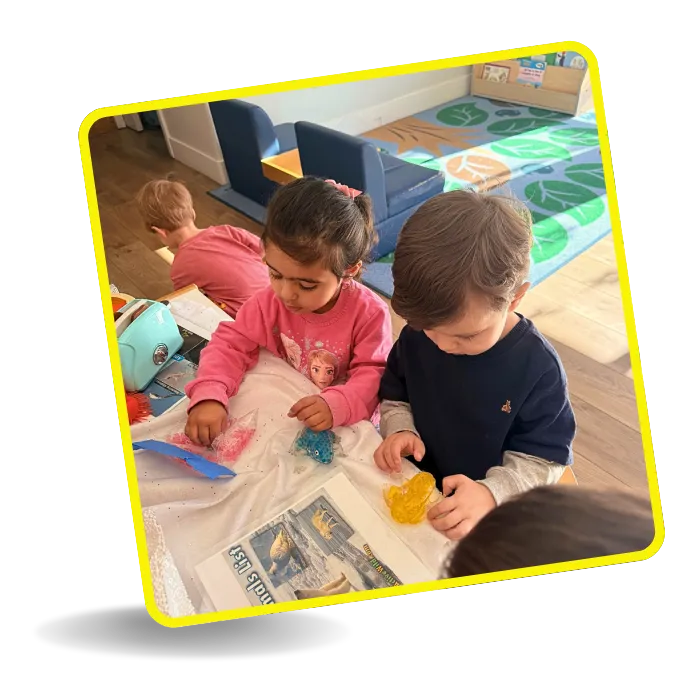
Learning That Starts With Curiosity
Walk into a Beginnings classroom, and you’ll see children choosing from dedicated learning areas for language, math, science, blocks, music, art, sensory exploration, fine motor development, and dramatic play.
These spaces give children different ways to investigate ideas and practice new skills.
A child building a tower is exploring balance, measurement, problem-solving, and spatial awareness
A child painting is developing creativity, fine motor control, language, and self-expression.
A pretend grocery store can become a lesson in communication, counting, cooperation, and social understanding.
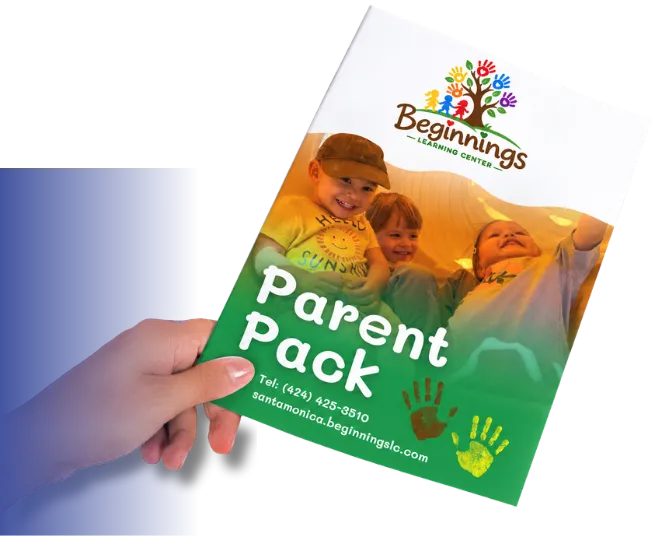
Get The Beginnings Parent Pack!
We put together a straightforward pack covering real classroom ratios, a sample daily schedule, what meals and enrichment actually look like week to week, and everything useful to know before you walk through the door for a tour.
Three Stages. One Growing Journey.
Your child’s needs at 18 months are very different from those of a five-year-old preparing for kindergarten. Our curriculum changes accordingly.
Toddlers
18 months–2 years
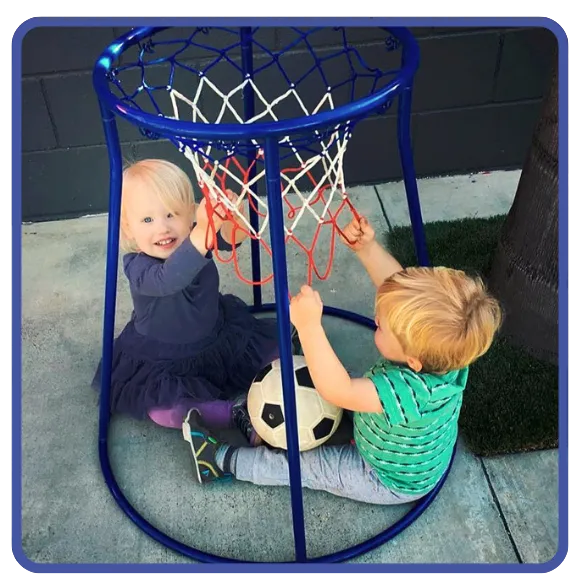
Toddlers explore through sensory play, music, and hands-on activities, with teachers close by to help them build vocabulary, take their first steps toward independence, and, when they're ready start the potty training process. We work at your child's pace, not a schedule, and partner directly with you on that transition.
Preschool
2–4 years
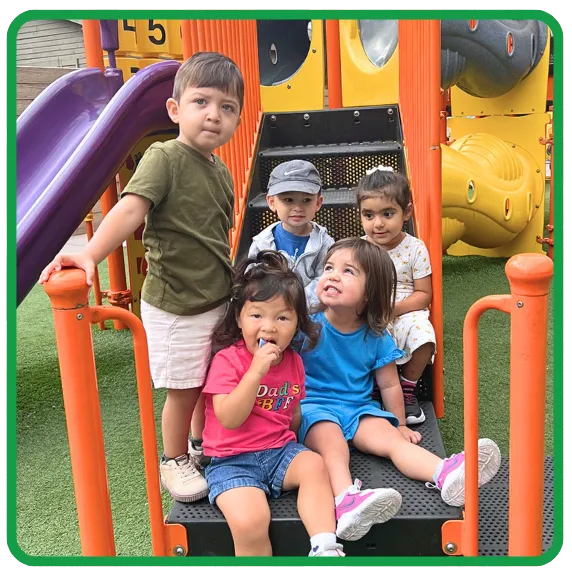
Preschoolers move through the full range of learning stations daily, with 2.5 to 3 hours of outdoor exploration built into every day. This is where early academics, social skills, and independence really start compounding.
Pre-K
4–5 years
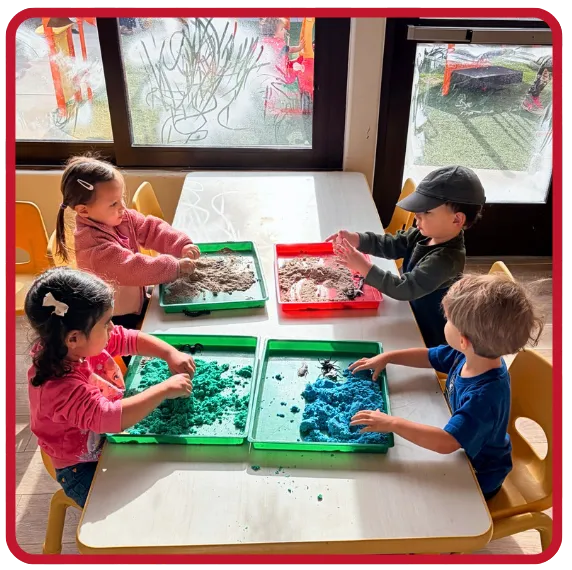
Our oldest children get up to three hours of outdoor time daily alongside more structured kindergarten-readiness activities, building the self-regulation, cooperation, and foundational academic skills that make the jump to elementary school feel like a natural next step, not a shock.
Learning Beyond the Classroom
At Beginnings, learning doesn’t stop at the classroom door.
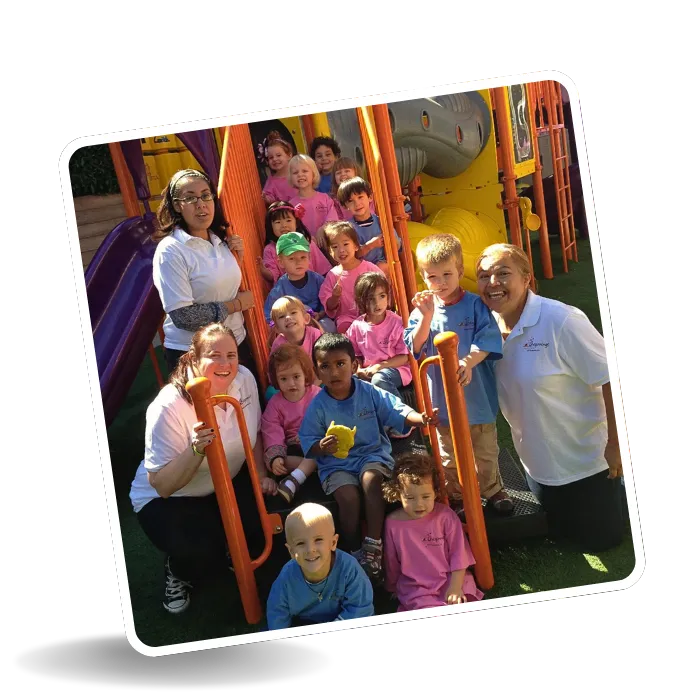
Children spend up to three hours outdoors every day, with time to run, climb, explore, imagine, and play alongside their friends. These experiences build gross-motor skills, coordination, confidence, problem-solving, and independence in ways a classroom simply can’t.
And some of the most important learning happens in the everyday moments between children: sharing materials, working through disagreements, communicating feelings, waiting for a turn, and learning how their actions affect others.
Through outdoor play and daily enriching classroom experiences, children are constantly learning how to move through the world, connect with others, and become more capable and confident in themselves.
Building Skills For Kindergarten Without Rushing Childhood
Kindergarten readiness is important. But we don't believe the answer is to turn preschool into school too early.
Instead, we build the foundations gradually. Our children are exposed to early literacy, math, science, problem-solving, physical development, creative expression, communication, and social-emotional skills through experiences that make sense for their age.
As they move toward Pre-K, those experiences become increasingly purposeful and structured, helping children develop the knowledge and confidence they need for their next step.
We want children to leave Beginnings ready for kindergarten, but still excited to learn.
See The Beginnings Curriculum In Action
The best way to understand our approach is to see it for yourself. Visit Beginnings Learning Center Santa Monica and meet our teachers, explore the classrooms, and see how learning happens throughout an ordinary day.
We are currently recruiting
Click here to find out more.